Afghanistan vs India 3rd T20I featured record-breaking batting, exciting T20 cricket and a 127-run Indian victory. Get the latest IND vs AFG 3rd T20I 2026 score, highlights, results, match details, Abhishek Sharma’s record century, India vs Afghanistan series result and key player performances.
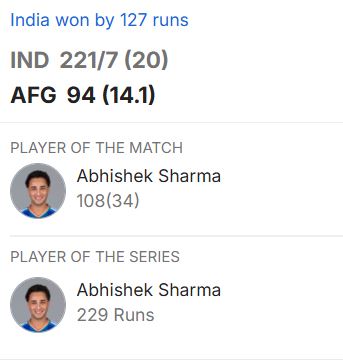
The Afghanistan vs India 3rd T20I was played on September 17, 2026, at the Arun Jaitley Stadium in New Delhi, bringing the three-match T20I series to its conclusion. India won the match by 127 runs, completing a 3-0 series sweep. Abhishek Sharma produced the standout performance with a record 30-ball T20I century, finishing with 108 from 34 balls, while India posted 221/7 before Afghanistan were dismissed for 94.
Afghanistan vs India 2026: A Heartwarming Series Finale and India’s Dominant T20I Performance
Afghanistan vs India 2026 delivered a memorable T20I series as India dominated Afghanistan, while Shreyas Iyer, Ibrahim Zadran and their teams shared a heartwarming trophy moment before heading toward Japan and the Asian Games. Afghanistan vs India 3rd T20I.
Afghanistan vs India 2026: A Heartwarming Series Finale
The Afghanistan vs India 2026 T20I series produced plenty of memorable cricket, but one of the most touching moments came after the action had finished. Shreyas Iyer and Ibrahim Zadran collected the trophy together before the Afghanistan captain helped carry it across to the Indian players.
Afghanistan vs India 3rd T20I, Zadran then stood among the Indian cricketers, smiling as both sides posed with the trophy. After a competitive international series, that simple gesture offered a reminder that cricket can create moments of friendship and respect even when the results on the field are heavily one-sided.
The series itself belonged firmly to India, who produced commanding performances throughout, but the post-match scenes showed a different side of the contest. Rather than allowing the result to define everything, the players shared a celebration that reflected the spirit of international cricket.
Afghanistan vs India 3rd T20I, For Afghanistan, the series represented another opportunity to test themselves against one of the strongest teams in the world. For India, it provided valuable preparation and momentum before the team’s upcoming commitments in Japan and the Asian Games.
The Trophy Moment That Stood Out Afghanistan vs India 3rd T20I
Trophies normally symbolize victory, but the presentation following the Afghanistan vs India 2026 series offered something slightly different. Shreyas Iyer and Ibrahim Zadran came together to collect the trophy, and Zadran subsequently helped carry it toward the Indian team.
The Afghanistan captain then joined the Indian players in the middle for the photographs, smiling alongside the opposition rather than standing apart from them. It was an uncomplicated scene, yet it carried plenty of meaning because the two teams had experienced very different results during the series.

India had controlled the cricket and completed a comprehensive series victory, while Afghanistan were left to reflect on the areas that needed improvement. Still, there was no bitterness in the final images. Instead, Afghanistan vs India 3rd T20I, the moment demonstrated how international cricket can combine fierce competition with genuine respect between opponents.
These are the photographs that often remain in the memory after individual boundaries, wickets and statistics have faded. A match lasts a few hours, but the relationships and sporting memories created around it can last much longer. Afghanistan vs India 3rd T20I.
India’s Commanding Series Performance
India’s performance across the Afghanistan vs India 2026 series demonstrated the difference that confidence, depth and consistent execution can make in T20I cricket. The Indian side managed key moments effectively, Afghanistan vs India 3rd T20I, applying pressure with the ball before producing powerful batting performances. The second T20I had already given India an unassailable 2-0 lead after a seven-wicket victory, and the final match completed a 3-0 sweep.
The final result gave India a clear series victory, but the performances also provided useful preparation for the next phase of the team’s international schedule. India’s batting group showed an aggressive approach, while the bowling unit repeatedly found ways to create pressure when Afghanistan attempted to build partnerships. Afghanistan vs India 3rd T20I.
In T20 cricket, momentum can disappear within a couple of overs, so maintaining control for long stretches is particularly valuable. India’s ability to do that was a major feature of the contest. Afghanistan were competitive in moments, but India repeatedly responded whenever the visitors appeared capable of building momentum. Afghanistan vs India 3rd T20I.
Shreyas Iyer and Ibrahim Zadran Share the Trophy
The interaction between Shreyas Iyer and Ibrahim Zadran was especially notable because both captains had very different responsibilities during the series. Iyer had the job of leading an Indian side expected to perform strongly at home, Afghanistan vs India 3rd T20I, while Zadran had to guide an Afghanistan team facing a difficult challenge against a deep Indian squad.
Despite those contrasting circumstances, the trophy moment brought the two leaders together. Iyer’s comments after the series also reflected a respectful attitude toward Afghanistan, Afghanistan vs India 3rd T20I, acknowledging that playing in India and competing in these conditions was not an easy assignment. Zadran, meanwhile, did not hide Afghanistan’s shortcomings.
He openly acknowledged that his side had lost wickets too frequently and needed to improve its ability to maintain intent throughout an innings. That honesty can be valuable for a developing team. International cricket is rarely about one isolated result; it is a long process of learning, adapting and building a stronger group. Afghanistan vs India 3rd T20I.
The shared trophy moment therefore worked as a fitting image for a series in which India celebrated victory while Afghanistan looked toward the work still ahead. Afghanistan vs India 3rd T20I.
Balls Player Team Opponents Venue, Year
30 Abhishek Sharma India Afghanistan Delhi, 2026
33 Sikandar Raza Zimbabwe Gambia Nairobi (Ruaraka), 2024
33 Finn Allen New Zealand South Africa Kolkata, 2026
35 David Miller South Africa Bangladesh Potchefstroom, 2017
35 Rohit Sharma India Sri Lanka Indore, 2017
Percentage Breakdown 4s/6s Batter Team Opponent Venue, Year
94.44% (102/108) 9/11 Abhishek Sharma India Afghanistan Delhi, 2026
93.33% (112/120) 10/12 Muhammad Fahad Turkey Bulgaria Sofia, 2025
91.67% (132/144*) 6/18 Sahil Chauhan Estonia Cyprus Episkopi, 2024
91.53% (108/118) 12/10 Rohit Sharma India Sri Lanka Indore, 2017
91.09% (92/101) 11/8 Jan Nicol Loftie-Eaton Namibia Nepal Kirtipur, 2024
Batter (Score) Opponent Opponent score Venue, Year
Virat Kohli (122*) Afghanistan 111/8 Dubai, 2022
Shubman Gill (126*) New Zealand 66 Ahmedabad, 2023
Suryakumar Yadav (100) South Africa 95 Johannesburg, 2023
Abhishek Sharma (135) England 97 Mumbai WS, 2025
Abhishek Sharma (108) Afghanistan 94 Delhi, 2026
Score Team Opponent Venue, Year
116/0 (5.4 overs) Romania Serbia Sofia, 2021
113/1 Australia Scotland Edinburgh, 2024
103/1 Zimbabwe Gambia Nairobi, 2024
102/0 South Africa West Indies Centurion, 2023
100/0 England South Africa Old Trafford, 2025
100/0 India Afghanistan Delhi, 2026
Afghanistan vs India 2026
India vs Afghanistan 2026
Afghanistan vs India highlights
IND vs AFG highlights
Afghanistan vs India scorecard
Abhishek Sharma 108
Abhishek Sharma 30-ball century
India vs Afghanistan 3-0
Afghanistan vs India T20I series
India vs Afghanistan 3rd T20I result
IND vs AFG 2026 scorecard
Arun Jaitley Stadium T20I

A Difficult Challenge for Afghanistan
For Afghanistan, the series was a demanding examination against a side with considerable experience and attacking options. Ibrahim Zadran acknowledged that Afghanistan had improved their intent during the powerplay but had failed to contribute consistently once wickets began falling in clusters.
Afghanistan vs India 3rd T20I, His assessment was straightforward: the team needed to work on taking its positive intent deeper into innings rather than losing consecutive wickets and allowing pressure to build.
That problem is particularly damaging in T20 cricket because an innings can change direction in only a few deliveries. Afghanistan possess players capable of producing explosive performances, but individual moments need to become part of a more consistent team structure. Afghanistan vs India 3rd T20I.
The challenge is not simply about hitting more boundaries or bowling faster. It is about understanding situations, preserving wickets, maintaining fitness and finding ways to stay competitive against elite opposition. Afghanistan vs India 3rd T20I.
Zadran’s comments suggested that Afghanistan recognize this process will take time. He also emphasized the importance of playing more matches against stronger teams. Regular exposure to high-level competition can reveal weaknesses that domestic cricket may not expose as clearly, giving players and coaches specific areas to address. Afghanistan vs India 3rd T20I.
Shreyas Iyer Reflects on India’s Win
India captain Shreyas Iyer offered an interesting perspective after the dominant series victory. Rather than describing the result simply as a one-sided contest, he emphasized respect for Afghanistan’s effort and the challenge of playing in India. Afghanistan vs India 3rd T20I, He also explained that he had expected to bat in the decisive game following discussions involving Ibrahim Zadran.
That preparation helped India approach the match with a clear understanding of their likely plans. The Indian captain was particularly pleased with the way Abhishek Sharma started the innings, describing his performance as flawless and enjoyable to watch. Afghanistan vs India 3rd T20I, Iyer also highlighted the importance of reaching a substantial total after an explosive beginning.
His comments revealed something important about successful T20 sides: aggressive cricket still requires planning. Batters can appear fearless at the crease, but behind that freedom there must be communication between captain, coach and players. Afghanistan vs India 3rd T20I, India were able to maintain that balance throughout the series, combining attacking intent with enough awareness to respond to changing match situations.
Respect for Afghanistan’s Effort
One of the strongest themes in Iyer’s comments was respect. Even after India had dominated the series, he did not dismiss Afghanistan’s effort. That distinction matters because international cricket brings together teams at different stages of development. A dominant result does not necessarily mean the losing side has no positives to take away. Afghanistan vs India 3rd T20I.
Afghanistan’s players gained experience against a high-quality Indian attack and batting lineup, while their captain was able to identify specific weaknesses. For a team attempting to compete more regularly at the highest level, such lessons can be valuable. Afghanistan vs India 3rd T20I, Iyer’s acknowledgement of Afghanistan’s effort also contributed to the positive atmosphere seen during the trophy presentation.
Competitive sport often creates intense pressure, but the best post-match moments can show players recognizing the work of their opponents. Afghanistan vs India 3rd T20I, The smiles shared by Iyer, Zadran and the Indian squad offered a fitting contrast to the intensity of the matches themselves. It was a reminder that winning and respecting the opposition can exist side by side.
Abhishek Sharma’s Flawless Batting
Abhishek Sharma emerged as one of the most exciting stories from India’s campaign against Afghanistan. His aggressive approach was not based simply on trying to hit every delivery. Instead, he explained that his basic philosophy was to watch the ball and respond according to what was delivered. That sounds simple, but executing it against international bowlers requires considerable skill.
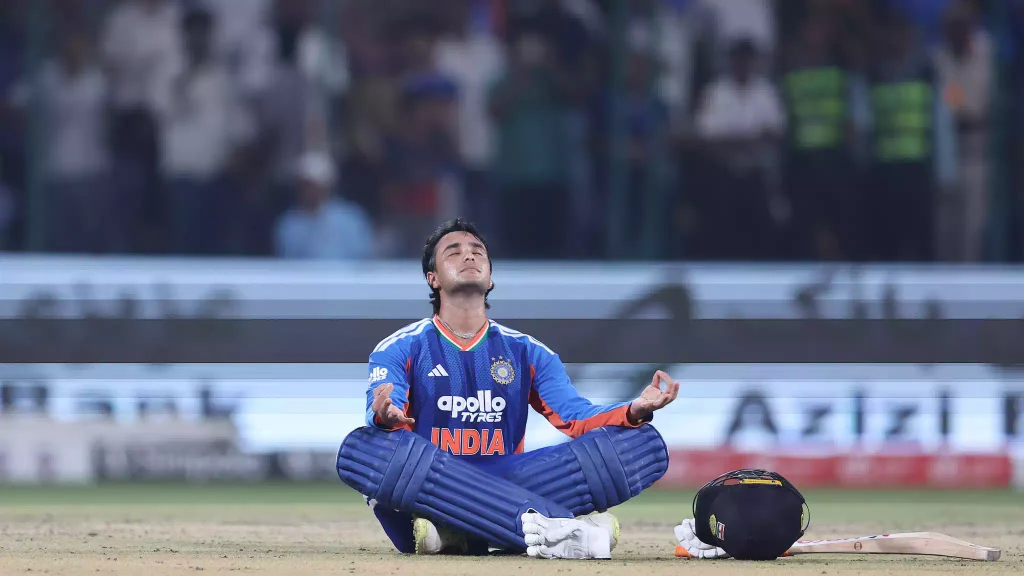
Abhishek’s ability to access different areas of the ground made him particularly dangerous because bowlers could not easily restrict him to one scoring zone. In the final T20I, he produced an extraordinary century from just 30 balls, finishing with 108, as India completed the series sweep. Afghanistan vs India 3rd T20I.
His performance showed what can happen when an attacking batter combines confidence with freedom. Rather than forcing a predetermined shot, he trusted his reactions and allowed his natural game to take over. That approach has become an important part of India’s modern T20 philosophy, where players are encouraged to express themselves while still understanding the match situation. Afghanistan vs India 3rd T20I.
Freedom, Trust and Team Culture
Abhishek also emphasized the role played by the captain, coach and wider management in allowing him to bat with freedom. His comments highlighted an important element of modern T20 cricket: players need to know that they have support even when an aggressive approach occasionally produces failure. Nobody can dominate every innings. Afghanistan vs India 3rd T20I.
A batter who attempts high-risk shots will sometimes lose their wicket early, and a successful team must accept that possibility if it wants to maintain a high attacking tempo. Abhishek explained that India’s culture has encouraged players to dominate the powerplay and make full use of fielding restrictions. That confidence can become contagious. Afghanistan vs India 3rd T20I.
When one player attacks successfully, the next batter can enter with greater belief. When the bowling unit follows that with disciplined spells, the opposition can quickly find itself under severe pressure. India’s performances against Afghanistan showed how powerful that cycle can become. The team’s approach was not simply about individual brilliance; it was also about creating an environment where attacking cricket became a shared responsibility. Afghanistan vs India 3rd T20I.
Axar Patel’s Important Contribution
While explosive batting attracted plenty of attention, Axar Patel remained an important part of India’s control with the ball. Shreyas Iyer specifically praised Axar’s ability to perform when critical moments arrive. The Indian captain described him as an experienced player who understands his game and remains composed under pressure. Afghanistan vs India 3rd T20I, That quality can be particularly important in T20 cricket, where one over can completely alter the direction of a match.
A spinner must constantly assess the batter’s intentions, field placements, pitch conditions and required run rate. Axar’s experience allows him to make those calculations quickly without becoming distracted by the pressure of the moment. India’s bowling unit benefited from having several players capable of taking responsibility in different phases of the innings. Afghanistan vs India 3rd T20I.
That variety made it difficult for Afghanistan to settle into a predictable rhythm. While headline performances naturally attract attention, tournament and series victories are often built on players who consistently perform their roles without needing the spotlight. Axar’s contribution fits that description. Afghanistan vs India 3rd T20I.
Experience Under Pressure
Experience becomes especially valuable when a team faces a difficult situation. Younger players can provide energy and aggression, but experienced cricketers often understand how to slow a game down when necessary. Afghanistan vs India 3rd T20I. Axar has spent years developing that ability, and Iyer’s praise underlined how much India value his role.
His consistency also gives the captain another option when the opposition begins to build a partnership. Instead of relying entirely on one bowler, India can distribute pressure across several players. That makes their attack more difficult to disrupt. Afghanistan vs India 3rd T20I, The same principle applies to batting.
India’s lineup has enough depth that one player does not have to carry the entire innings. When Abhishek attacked at the top, other batters could support him, allowing India to maintain a high scoring rate without depending on one individual. This balance between youth, aggression and experience was one of the defining features of the series. Afghanistan vs India 3rd T20I.
Ibrahim Zadran’s Honest Assessment
Ibrahim Zadran provided perhaps the clearest explanation of Afghanistan’s position after the series. He admitted that his team had shown improved intent in the powerplay but had not contributed sufficiently once wickets began to fall. Afghanistan vs India 3rd T20I, His comments were neither dramatic nor defensive.
Instead, he identified the need for greater consistency and explained that Afghanistan would continue working on their approach. That attitude can be important for a team developing its identity in international cricket. Afghanistan vs India 3rd T20I, Losing heavily can expose weaknesses, but it can also provide a detailed list of areas that need attention.
Zadran’s focus on intent suggested that Afghanistan do not want to become overly cautious after a difficult series. At the same time, aggressive cricket must be supported by smart decision-making. Afghanistan vs India 3rd T20I, A team cannot simply attack every delivery and expect consistent results. The next step is learning when to take risks and when to preserve resources. That balance will be central to Afghanistan’s development.
Afghanistan’s Need for More International Cricket
Zadran also stressed that Afghanistan need more matches, especially against major international teams. His argument is straightforward: players improve by repeatedly facing strong opposition. Training sessions can develop technique, but competitive matches reveal how players respond when every ball carries consequences. Afghanistan vs India 3rd T20I.
Afghanistan already have experience against teams such as Zimbabwe and Ireland, but Zadran believes more opportunities against top sides would help bridge the gap. The process will not happen overnight. Developing a stronger international team requires investment in fitness, skills, domestic structures, coaching and regular exposure to demanding opponents.
Afghanistan’s players have demonstrated that they possess individual talent, but transforming that talent into consistent team performances requires time. The Afghanistan vs India 2026 series therefore should not be viewed only through the final scoreline. It also provided Afghanistan with information about where the team stands and what needs to change. That information can become useful if the players and management act on it.
The Importance of Fitness and Development
Fitness was another major theme in Zadran’s assessment. Modern T20 cricket demands much more than technical ability. Players need to sprint between wickets, cover ground in the field, bowl repeated high-intensity spells and maintain concentration under pressure. A physically stronger team can often maintain its intensity deep into a match, while fatigue can lead to dropped catches, slower running and mistakes in decision-making.
Zadran’s comments suggested that Afghanistan recognize the need to raise their standards in this area. The goal is not simply to become physically stronger; it is to build a professional routine that supports consistent international performance. Nutrition, recovery, strength training, mobility and workload management all form part of that process.
When these areas improve, players can focus more clearly on tactical execution. For Afghanistan, the lessons from India can therefore extend beyond batting and bowling. The series highlighted the broader demands of competing against teams that have developed sophisticated high-performance environments.
Building Confidence Against Bigger Teams
Confidence is another element that grows through experience. When a team regularly faces strong opponents, difficult situations become less unfamiliar. A young batter who has already faced elite bowlers in several international series may feel less overwhelmed the next time a major team applies pressure. The same applies to bowlers defending a total against experienced batters.
Afghanistan’s future progress may depend on turning difficult experiences into repeatable lessons. The team does not need to become a completely different side overnight. Instead, small improvements can accumulate: better partnerships, fewer unnecessary wickets, sharper fielding, improved fitness and smarter use of key bowlers.
Over time, those changes can make close matches more frequent. Zadran’s willingness to acknowledge that development will take time is therefore significant. International cricket rewards patience as much as ambition. The challenge for Afghanistan is to keep the ambition alive while building the foundations necessary to support it.
What the Series Means for India
For India, the Afghanistan vs India 2026 series offered more than another entry in the win column. The three-match series provided opportunities for players to establish roles, develop combinations and prepare for upcoming international commitments. India won all three matches, with the second T20I producing a seven-wicket victory before the final match ended in a 127-run win.
The final performance included Abhishek Sharma’s record-breaking 108 from 30 deliveries, while India’s bowlers eventually dismissed Afghanistan for 94. Such results can create confidence, but they also need to be viewed within the broader schedule.
India are moving quickly from one assignment to another, with the Asian Games approaching and a historic T20I against Japan scheduled before the tournament. The value of the Afghanistan series therefore lies partly in how effectively India can carry lessons, combinations and confidence into the next challenge.
Momentum Before the Asian Games
India’s next major focus is the Asian Games in Japan. The Afghanistan series came at an important point in the calendar because it gave the squad competitive cricket before travelling to Japan. The ICC has confirmed that India will face Japan in a historic men’s T20I on September 22 at the Sano International Cricket Ground, with both nations also involved in the Asian Games cricket competition.
That fixture gives India another opportunity to prepare in Japanese conditions before the tournament. The team can also use the match to manage workloads and assess players ahead of the knockout stage. India’s preparation will therefore continue beyond the Afghanistan series.
The transition from Delhi to Japan will require adjustments in conditions, travel and match environment. A successful team must adapt quickly, and the Afghanistan series has given India’s players a strong competitive platform from which to move forward.
Japan Awaits Both Teams
The next chapter for both Afghanistan and India takes place in Japan, where the Asian Games will provide a different setting and a new competitive challenge. The teams will not simply be repeating the circumstances of the Delhi series. Conditions, opponents and tournament structures will change, and every match will carry its own tactical demands.
For India, the historic meeting with Japan on September 22 will be particularly significant because it is the first men’s T20I between the two countries. The ICC confirmed the match as part of India’s preparation for the Asian Games. For Afghanistan, the Asian Games offer another chance to continue developing against international opposition. Their experience against India can provide lessons that become useful when they face different teams. The journey from Delhi to Japan therefore represents more than a change of location. It is another stage in the development of two teams moving through different but connected cricketing challenges.
India’s Historic T20I Against Japan
The upcoming India-Japan fixture is significant beyond the immediate result. Japan is continuing to develop cricket and will host an international contest against India for the first time. The match is scheduled for September 22 at Sano International Cricket Ground, while Japan’s Asian Games campaign begins shortly afterward. For India, it is an opportunity to become familiar with the environment before the Asian Games.
For Japan, playing against the reigning T20 World Cup champions offers an unusual level of international experience. The occasion also represents the wider expansion of cricket into new markets. Matches like this can introduce new audiences to the sport and give developing cricket nations access to higher levels of competition.
The result will naturally attract attention, but the wider significance is the opportunity to grow the game. That makes the transition from the Afghanistan vs India 2026 series to the India-Japan fixture an interesting part of the broader international cricket calendar.
Conclusion
The Afghanistan vs India 2026 series ended with India celebrating a comprehensive victory, but the final images offered a warmer story than the scorecards alone could tell. Shreyas Iyer and Ibrahim Zadran sharing the trophy, followed by Zadran carrying it toward the Indian players and joining their celebration, created a memorable picture of sporting respect.
India had dominated the cricket, while Afghanistan were left with important lessons about consistency, fitness, partnerships and performing under pressure. Iyer praised Abhishek Sharma’s remarkable batting and Axar Patel’s experience, while Zadran openly discussed what Afghanistan need to do to become more competitive against the world’s strongest teams.
The series also served as preparation for the next stage of the international calendar, with both teams heading toward Japan and the Asian Games. India will additionally face Japan in a historic T20I on September 22. Ultimately, the series combined powerful cricket with a genuinely positive sporting moment, leaving India with momentum and Afghanistan with valuable experience to build upon.
FAQs
- Who won the Afghanistan vs India 2026 T20I series?
India won the three-match T20I series 3-0, completing victories in all three matches. The second T20I was won by India by seven wickets, while the final match ended with India winning by 127 runs.
- Who was the standout batter for India?
Abhishek Sharma was one of India’s standout performers. In the final T20I, he scored 108 runs from only 30 deliveries, setting a new mark as India’s fastest T20I century.
- What did Ibrahim Zadran say after the series?
Ibrahim Zadran acknowledged Afghanistan’s shortcomings, particularly the loss of consecutive wickets, while emphasizing the importance of more international matches, improved fitness and continued development against stronger teams.
- What did Shreyas Iyer say about Abhishek Sharma?
Shreyas Iyer praised Abhishek’s batting as flawless and highlighted how pleasing his performance was to watch. He also credited the team’s strong start and ability to build a large total.
- What comes next for India after the Afghanistan series?
India are scheduled to travel to Japan for the Asian Games. Before their Asian Games campaign, India are due to play Japan in a historic men’s T20I on September 22 at Sano International Cricket Ground.